Stemtree of Spring TX: Robotics Classes for Kids—Smart Machines
From the moment a child touches a reset button on a tiny programmable rover, the world tilts a little toward possibility. I’ve watched it countless times in the long hallway of a robotics classroom, where the hum of motors is less a soundtrack than a chorus of problem solving. At Stemtree in Spring TX, the space is designed not as a toy shop but as a workshop for thinking. It is a place where curiosity isn’t merely tolerated; it’s encouraged, tested, and refined in real time as kids wrestle with code, sensors, and the stubborn physics of motion.
The heart of Stemtree’s offering lies in a simple truth: kids learn best when they can see themselves as builders, not just observers. The robotics classes for kids that happen here are more than a sequence of lessons. They’re guided explorations that blend technical skill with the messiness of trial and error. The goal is not a perfect project, but a student who understands why a solution works, or why it doesn’t, and who is ready to try something different without feeling shut down by failure. In Spring TX this matters because the after school stem programs don’t live in isolation. They’re part of a larger ecosystem of inquiry, where students push against boundaries and teachers respond with calibrated questions, precise feedback, and a pace that matches a child’s growth.
The environment itself deserves attention. The lab feels less like a showroom of gadgets and more like a ship’s hold: organized, intentional, with space for cables, a variety of microcontrollers, and a wall that documents ideas as they evolve. When a student documents a working line of code on a whiteboard, it isn’t bragging. It’s a map of what happened, what failed, and what might happen next. That habit of recording progress translates outside the classroom too. It becomes a tool for teamwork, for explaining complex ideas to a peer, and for presenting a project to a family that might never have coded a line but can understand a well-told story of discovery.
The Spring TX setting—a place where neighborhoods celebrate local schools and community learning centers—lends itself to a rhythm that works for families. After school programs offered by Stemtree meet kids where they are, with schedules that acknowledge practice, play, and, yes, the occasional parent chauffeur moment. The classes are structured enough to build competence and flexible enough to preserve a child’s sense of wonder. The result is not a one-off achievement, but a trajectory. A student who starts with a basic line follower may end the term debugging a sensor fusion challenge or programming a robot to adapt to a changing light environment.
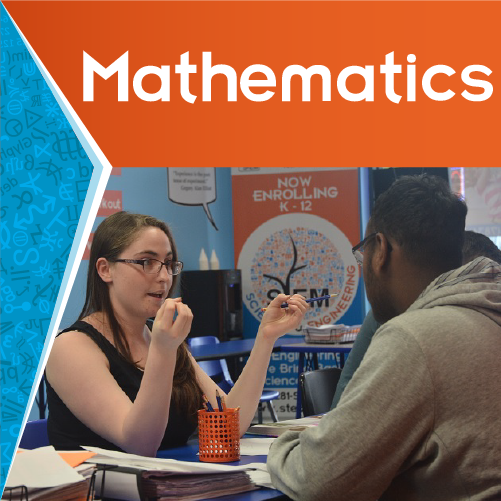
What follows is a portrait of what makes Stemtree’s robotics programs meaningful in Spring TX, drawn from years of classroom observation, student conversations, and the quiet breakthroughs that occur when a learner finally makes a stray motor behave in concert with a plan. It is not a marketing piece, but a field note description of how a well-timed question, a patient instructor, and a well-chosen set of tools can shift a child’s sense of what is possible.
The core experience at Stemtree rests on three intertwined pillars: hands-on building, precise coding, and reflective problem solving. The kids arrive with varying degrees of exposure to technology, and the instructors meet them at their point of need. For some, robotics is a natural extension of play; for others, it’s a challenging new language to learn. The instructors don’t pretend the road is short or simple. They acknowledge the friction that comes with learning to debug a line of code that controls a motor, or with tuning a servo to respond to the exact rhythm of a sensor reading. The payoff, when it comes, is quiet and emphatic at the same time: a student’s eyes light up not because a robot did something cool, but because a plan worked, because the plan made sense, and because the student could articulate the steps that led there.
A standout feature of Stemtree’s approach is the deliberate progression through complexity. The early units are tactile and visual: building a basic rover from a kit, wiring a circuit, observing how a motor responds to a simple command. These are the gentle footholds that invite a learner to stay the course. As weeks pass, the projects compound. The curriculum introduces sensors in a way that feels incremental rather than overwhelming. A student might begin by sensing light or distance, then graduate to interpreting those inputs in code, and finally stitching the inputs together with output actions that make the robot behave in adaptive ways. It’s a sequence that respects a child’s cognitive pace while still offering the exhilaration of reaching new horizons.
Practicality matters, too. In a real lab, there are constraints—timelines, space, and safety concerns—that could easily derail a classroom. The Stemtree team is adept at turning these constraints into design challenges. A robot that needs to navigate a narrow corridor, for instance, becomes a mini project about precision turning and trajectory planning. A malfunctioning sensor is not a dead end but a puzzle that pushes a student to test alternative configurations or write more robust code. The process teaches resilience without souring the experience. If a plan doesn’t work, the student learns to reframe the goal rather than blame the device.
Within this framework, a lot of the learning happens through collaborative work. Teams of two or three students tackle a project, while the instructor acts as a guide rather than a commander. The dynamic mirrors real-world engineering cultures where teams diagnose issues collectively, debate approaches, and assign responsibilities. The social dimension of robotics class is not an afterthought; it’s a thread that unites technical growth with communication skills. Kids learn to explain their reasoning clearly, to listen critically to a peer’s critique, and to revise an approach based on constructive feedback. Those are the soft skills that travel beyond the lab and into classrooms, clubs, and even summer programs after graduation day at Stemtree.
What does a typical session feel like for a parent listening from the hallway, a few feet from the classroom door? The cadence is reassuringly steady. The class opens with a quick recap of yesterday’s progress and a crisp statement of today’s objective. The instructor demonstrates a key technique or an optimization trick—perhaps how to calibrate a wheel encoder for more accurate straight-line travel—then invites students to experiment, record, and reflect. There is plenty of moving parts in the air: bolts clicking into a chassis, heat from a soldering iron briefly warming a list of components, the quiet murmur of peers negotiating a solution. The most striking moment often arrives when a student articulates a correction that an adult in the room hadn’t anticipated. The room’s mood shifts in that moment from trial and error to shared realization.
For families considering whether to enroll, a few practical points tend to surface quickly. The STEM education center operates with a schedule that respects kids’ other commitments—academic responsibilities, sports, music lessons—and still provides a reliable space to grow. The after school stem programs are designed to be accessible to beginners while still offering depth for those who crave more challenge. It’s common to see a student who initially struggles with a basic line follower eventually tackle a multi-robot collaboration exercise, where teams must coordinate timing, path planning, and sensor inputs to complete a task in a shared arena.
In the broader landscape of after school clubs and enrichment options, Stemtree differentiates itself through its emphasis on real problem solving, not merely project completion. The projects are selected to be meaningful in a tangible way. A robot that can follow a line is a neat demonstration, but a robot that can navigate a maze and adapt to detours reveals a wider design principle: the capacity to interpret, adjust, and learn under uncertainty. The sense of accomplishment when a student completes a project that others can observe and understand is not just about a finished gadget; it’s about the student having built a mental model that now includes more variables, more contingencies, and more strategies for testing ideas.
The outcomes you might measure after weeks in Spring TX’s Stemtree program go beyond the robot itself. There is a measurable uptick in confidence around problem solving, an increased willingness to verbalize what a plan entails, and a visible shift in how a child frames challenges. Instead of saying I can’t do this, a student might say I can’t do this yet, which is a subtle but powerful transition. The improvements are not guaranteed to be dramatic in every respect, and that is essential to acknowledge. Some learners move quickly through initial milestones while others deepen a single concept, exploring it with different materials and perspectives until it clicks. The lab rewards patient curiosity and steady work more than flashy outcomes.
To build a robust robotics program, you need more than kits and code. You need mentors who treat students with respect, who pace the material thoughtfully, and who bring a sense of curiosity that infects the room. Stemtree’s instructors bring real-world experience to the classroom. They’ve worked on projects that required iteration, testing, and documentation. They understand that a good lesson is not a single demonstration but a series of connected experiences that help a student connect the dots between a line of code and a tangible action in a robotic system. When a teacher explains why a sensor reading changes in a specific context or how a control loop stabilizes a system, the explanation lands with clarity because it’s anchored in every day practice.
If you’re considering whether this is the right next step for your child, a few deciding questions can help. Does your child enjoy tinkering and asking questions about how things work? Are they excited by the prospect of turning a curiosity into a concrete product, even if the path there involves missteps? Is there room in your schedule for a consistent, regular after school activity that emphasizes incremental progress and reflective practice? If the answer to these questions is yes, Stemtree’s robotics classes for kids in Spring TX offer a compelling combination of hands-on engagement, logical reasoning, and collaborative problem solving that can anchor a richer understanding of STEM concepts long after the robots have been returned to the shelf.
Two snapshots from classrooms illustrate the range and depth. In one room, a group of students works with a line following challenge that doubles as a geometry lesson. The kids measure distances, adjust wheel diameters, and homeschool programs spring tx rewrite a snippet of code to compensate for drift caused by wheel wear. The instructor circulates, asking questions that force the group to articulate their rationale. Why did you choose this algorithm rather than that one? How might you test your assumption? The dialogue is brisk, precise, and rooted in the goal of a reliable navigation solution. In a neighboring station, a different cohort experiments with a small autonomous shuttle. They map a course, crowdsource ideas about obstacle avoidance, and implement a simple rule set that keeps the shuttle from colliding with walls or with other robots in the room. The emphasis is not speed but reliability, and the kids respond with patient iteration, a willingness to rewrite sections of code, and a growing vocabulary for discussing sensor data and control strategies.
The after school stem programs at Stemtree also function as a bridge to more advanced pursuits in STEM. For families with ambitions for their children to pursue engineering, computer science, or robotics at a higher level, these early experiences provide a platform for later specialization. Students who enjoy the robotics rhythm may progress into more complex projects, learning about microcontrollers, PWM signals, and machine design with a level of fluency that makes subsequent courses feel less intimidating. The sense of progression is real, not manufactured. It’s visible in small improvements, in a child’s careful test plan, in the way a student’s notes begin to resemble a design diary rather than a rough sketch.
In terms of contingencies and edge cases, there are a few realities worth noting. Some weeks bring a tighter schedule or a larger class, which can alter the pace and require more self-regulation from students. Others bring a breakthrough moment that accelerates learning, and the room becomes a space of quick, collaborative coding sessions and rapid hardware adjustments. The best outcomes often come to those who adapt—who arrive ready to listen, to observe, and to revise plans with humility and focus. And there is no magic shortcut. The real work of robotics education is daily: a small practice, a careful note, a deliberate test, and the generous feedback of a mentor who has done the same work themselves.
For families exploring options, consider the long arc of your child’s education. The decision to enroll in Stemtree’s Spring TX program is not a single move but a commitment to a recurring pattern of learning that blends curiosity, accountability, and hands-on technique. It’s about building a personal toolkit for thinking, not a shelf of completed gadgets. The programs are not designed to replace classroom learning but to complement it, to offer a different lens through which to view science and technology, and to provide a social setting where kids practice collaboration and communication as part of every project.
Two short lists may help frame practical considerations without turning this into a checklist. The first highlights what students typically gain from the program in a tangible way, while the second offers quick ideas for families about how to maximize the experience.
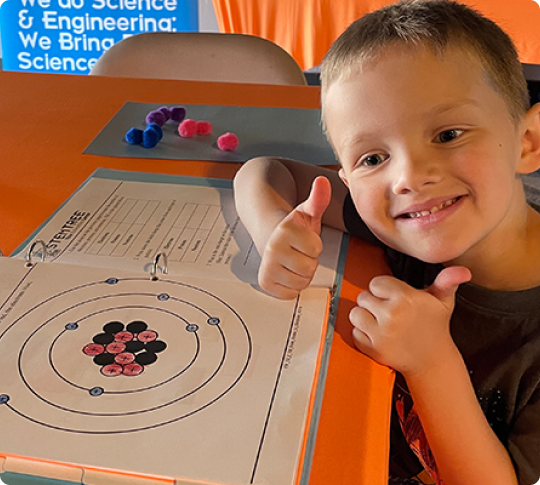
What students typically gain from Stemtree robotics classes in Spring TX
- A clear framework for problem solving that connects theory to hands-on practice
- Confidence in debugging code and tuning hardware
- Experience working in small teams to plan, execute, and reflect on projects
- A growing vocabulary for discussing sensors, actuators, and control strategies
- A portfolio of projects and documented progress to share with teachers and family
Ways to maximize the learning experience in after school stem programs
- Schedule consistency helps students build momentum; try to attend regularly
- Encourage kids to explain their reasoning after each project, even when the outcome isn’t perfect
- Have a light pre-session talk with your child about the day’s objective to prime curiosity
- Engage with instructors by sharing your child’s interests and observed strengths
- Celebrate effort and process as much as results, reinforcing a growth mindset
If you’re curious about where Stemtree sits in the broader ecosystem of STEM education, it helps to compare the approach with other enrichment paths. Some programs emphasize theoretical knowledge and rote execution, others chase a spectacle of gadgets to capture attention. Stemtree occupies a middle ground: it embraces practical hardware and software integration while maintaining a clear focus on critical thinking and problem solving. The result is not only a set of technical skills but an orientation toward experimentation that students carry into other subjects. That cross-pollination matters because engineering and science rarely live in isolated silos. The same attention to measurement, iteration, and peer feedback that a student uses to optimize a robot’s navigational algorithm can easily inform a math problem, a science lab, or a design project in a humanities class that invites structured inquiry.
The landscape of after school options is widening, and it’s worth acknowledging how access, equity, and inclusion fit into the equation. Programs like Stemtree are more than a pipeline into a lucrative field; they are spaces where diverse young learners can see themselves as capable contributors to technology—sometimes for the first time. When students from different backgrounds collaborate on a common project, they practice not just technical skills but social ones, learning to value multiple perspectives, negotiate constraints, and translate complex ideas into actions that others can understand. The classroom becomes a microcosm for democratic problem solving, where every voice matters and every attempt has value even if it ends in a lesson learned rather than a prize won.
In the end, the story of Stemtree in Spring TX is about more than robotics. It is a narrative of how children encounter a world that is increasingly driven by technology and decide to engage with it in thoughtful, resilient ways. It is about mentors who know that the most important lesson is not the particular line of code a student writes today, but the habit of asking good questions, the discipline of testing ideas, and the courage to pursue answers that may take weeks to reveal themselves. It is about a community that invests in the long arc of a child’s education, recognizing that small, steady steps can yield meaningful shifts in confidence and capability.
For families who have watched their children gaze curiously at a robot in a storefront window or pause to ask how something works before turning away, Stemtree offers a pathway that honors that spark. The after school stem programs create a rhythm in which curiosity is sustained, not extinguished, by the realities of learning. The rovers and sensors become more than devices; they become anchors for thinking. The students who move through this program leave with more than a handful of completed projects. They leave with a mindset that values clarity, the tenacity to test ideas, and the social fluency to share what they have learned with others. In Spring TX, that combination matters, perhaps more than any single project, because it prepares young minds to contribute to the technologies shaping their world with both competence and care.